
There’s a festive treasure wrapped in vibrant colors adn swirling dough that has captured the hearts and palates of countless celebrations: the King Cake. More than just a sweet treat, the King Cake is a confection steeped in history, ritual, and regional flair, weaving together centuries of tradition into each bite. from dazzling Mardi Gras parades in New Orleans to cozy gatherings around family tables, this royal delicacy symbolizes more than indulgence-it’s a slice of cultural heritage. Join us as we explore the rich origins, enchanting customs, and appetizing variations of the King Cake, revealing why this regal pastry continues to reign supreme in the world of festive delights.
King Cake Delight invites you to indulge in a centuries-old tradition filled with rich flavors and vibrant symbolism. Originating from the festive celebrations of Epiphany in Europe, this regal pastry has journeyed across continents to become an iconic centerpiece of Mardi Gras and Carnival festivities, especially in Louisiana. Its colorful icing and hidden treasures are more than just celebratory symbols; they weave stories of kings, community, and joyful anticipation.
Prep and Cook Time
- Planning: 45 minutes
- Rising Time: 1 hour 30 minutes
- Baking Time: 25 minutes
- Total Time: 2 hours 40 minutes
Yield
1 large King Cake (serves 10-12)
Difficulty Level
Medium – Ideal for confident home bakers seeking a rewarding challenge
ingredients
- 1 cup warm whole milk (110°F/43°C)
- 1/2 cup granulated sugar
- 2 teaspoons active dry yeast
- 4 cups all-purpose flour, sifted
- 1/2 teaspoon salt
- 1 tablespoon ground cinnamon
- 1/2 cup unsalted butter, softened
- 3 large eggs, room temperature
- 1 teaspoon vanilla extract
- 1 teaspoon orange zest, finely grated
- Colored sanding sugars: purple, green, and gold (approx. 1/4 cup each)
- 1/2 cup powdered sugar
- 2 tablespoons fresh lemon juice
- 1 tablespoon water (for glaze)
- 1 plastic baby figurine (traditionally hidden inside)
Instructions
- Activate the yeast: In a small bowl, combine warm milk, sugar, and yeast.Stir gently and let sit for 5-10 minutes until foamy, indicating active yeast.
- Prepare the dough base: In a large mixing bowl, whisk together flour, salt, and cinnamon. Add softened butter, eggs, vanilla extract, and orange zest.
- Combine wet and dry ingredients: Pour the activated yeast mixture into the flour mixture. Using a stand mixer fitted with a dough hook, mix on low speed until ingredients come together.
- Knead the dough: Increase speed to medium and knead for 7-10 minutes until dough is smooth,elastic,and slightly tacky but not sticky. If needed, add small amounts of flour, one tablespoon at a time, to achieve desired consistency.
- First rise: Form the dough into a ball and place in a greased bowl. Cover with a clean kitchen towel or plastic wrap. Let it rise in a warm place for 1 hour or until it doubles in size.
- Shape the cake: On a floured surface, punch down the dough to release air. Roll into a large rectangle (~16×12 inches). If desired, sprinkle a thin layer of cinnamon sugar for an extra flavor burst.
- Form the ring: Roll the rectangle gently into a tight log, pinching edges to seal. Shape the log into a ring and seal the ends well to prevent separation during baking.
- Second rise: Place the ring on a parchment-lined baking sheet. Cover loosely and let rise again for 30 minutes.
- Bake: Preheat oven to 350°F (175°C). Bake the King Cake for 25 minutes or until golden brown and a toothpick inserted comes out clean.
- Prepare the glaze: Whisk powdered sugar,lemon juice,and water until smooth and slightly pourable.
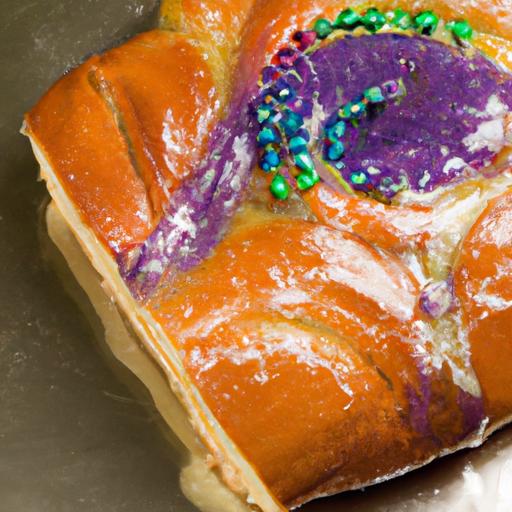
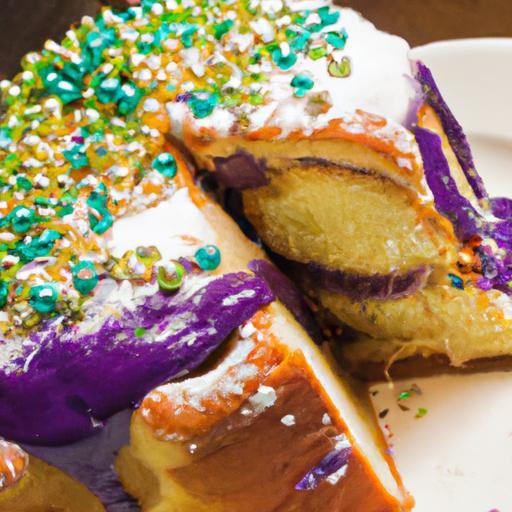
- Decorate: While the cake cools slightly (about 10 minutes), drizzle the glaze over the top. Promptly sprinkle generously with purple, green, and gold sanding sugars in sections to create the classic Mardi Gras color pattern.
- Hide the baby: Once the cake is entirely cooled, insert the plastic baby figurine discreetly under the cake or inside a slit before serving. Remember to warn guests of its presence!
Chef’s Notes
- Flavor twists: Add dried fruit or pecans to the dough for added texture and depth.
- Dairy-free substitution: Replace butter with coconut oil and use almond or oat milk to keep it vegan-amiable.
- Make-ahead tip: The dough can be prepared the day before and refrigerated after the first rise. Allow it to come to room temperature before shaping and proceeding.
- Troubleshooting: If your dough isn’t rising, check the yeast’s freshness and the milk temperature. Yeast activates best between 100°F and 110°F.
- Serving safety: Always warn guests if the baby figurine is hidden inside to avoid choking risks.
Serving Suggestions
Present this King Cake Delight on a vibrant Mardi Gras-themed platter to highlight the vivid jewel-toned sugars.Slice generously and serve alongside freshly brewed coffee or a rich spiced tea. Garnish plates with fresh orange zest curls or edible gold flakes for a touch of elegance.For an interactive experience, invite guests to find the hidden baby figurine and savor the tradition together!
| Nutrient | Per Serving |
|---|---|
| Calories | 320 |
| Protein | 6g |
| Carbohydrates | 45g |
| Fat | 11g |

Discover more about festive breads in our Festive Breads Around the World article. For deep historical insight on King cake traditions, visit the History Channel’s Mardi Gras page.
Q&A
Q&A: The Royal Treat – Exploring the Tradition of King Cake Delight
Q1: What is a King Cake, and why is it considered a royal treat?
A1: The King Cake is a festive pastry with a rich, colorful history tied to celebration and tradition. Its name honors the biblical Magi-the Three Kings-who visited baby Jesus, symbolizing the cake’s regal roots. Often adorned in vibrant purple, green, and gold icing, the King Cake embodies a sense of celebration fit for royalty, blending delicious flavors with cultural significance.
Q2: Where and when did the tradition of King Cake originate?
A2: The origin of King Cake can be traced back to medieval Europe, with influences from France and Spain. Traditionally, it was served during the pre-Lenten season of Epiphany, also known as King’s Day, celebrated on January 6th. Over time, the tradition crossed the atlantic and became a beloved custom in places like New Orleans, where it’s a staple of the Mardi Gras festival.
Q3: What makes a King Cake unique compared to other pastries?
A3: Beyond its festive appearance, what truly sets King Cake apart is the hidden surprise inside-a tiny baby figurine or sometimes a bean. This playful element turns the cake into a communal game: whoever finds the token is crowned “king” or “queen” for the day and is tasked with hosting the next King Cake party, perpetuating a joyful cycle of community and celebration.
Q4: How is a conventional King Cake made?
A4: A classic King Cake is a cinnamon-spiced sweet dough, braided or shaped into a circular ring symbolizing unity and eternity. after baking, it’s lavishly iced and sprinkled with colored sugar in purple (justice), green (faith), and gold (power). Variations often include fillings like cream cheese, praline, or fruit preserves, adding layers of flavor to this festive staple.
Q5: How has the King Cake tradition evolved in modern times?
A5: Modern King Cakes have embraced creativity and variety. Artisans experiment with flavors ranging from classic cinnamon to chocolate, strawberry, and even savory spins. The baby figurine tradition remains, but some bakers use themed tokens, and celebrations have broadened beyond Mardi Gras communities, making the King Cake a symbol of joyous gathering for many.Q6: why is the King Cake more than just a dessert?
A6: The King Cake is a sweet embodiment of community,celebration,and cultural heritage. It fosters connection through shared rituals and friendly competition,reminding us how food can be a bridge between history and present-day joy.Each bite offers not just flavor, but a taste of tradition that has been lovingly passed down through generations.
Q7: Can anyone partake in the King Cake tradition, or is it strictly regional?
A7: While deeply rooted in Southern U.S. culture,especially in Louisiana,the king Cake tradition has inspired enthusiasts worldwide. Many bakeries now offer King Cakes year-round, inviting anyone to join in the fun and flavor. Whether you’re at a Mardi Gras parade or enjoying a gathering at home, the royal treat welcomes all who crave a slice of history and festivity.
Closing Remarks
As the last crumb of King Cake disappears, we find ourselves not just satiated but woven into a rich tapestry of tradition, celebration, and shared joy. This royal treat,with its colorful hues and hidden charms,invites us year after year to partake in a ceremony that transcends taste-connecting past and present,community and festivity. whether you savor it during Mardi Gras or simply appreciate its storied journey, the King Cake remains a delicious emblem of culture and conviviality, reminding us that sometimes, the sweetest delights are those steeped in history and shared with others. Long may the tradition of King Cake delight reign!