
Steaming bowls of congee have long been a quiet comfort woven into the fabric of countless cultures, a humble rice porridge that transcends borders and traditions. From the bustling streets of Southeast Asia to serene kitchen tables in East Asia and beyond, congee serves as both a nourishing staple and a culinary canvas-simple yet infinitely adaptable. this age-old dish, often whispered as a remedy for the weary or a festivity of morning rituals, tells a rich story not only of sustenance but of community, history, and care. Join us as we explore the heartwarming world of congee, uncovering how this comforting rice porridge epitomizes the global human search for warmth, flavor, and connection.
Congee, a timeless comfort staple, traces its roots back thousands of years across Asia, where humble grains of rice are lovingly transformed into a warm, soothing porridge. This beloved dish exemplifies how simple ingredients can nourish body and soul, weaving through diverse cultures while evolving unique regional flavors and traditions. Whether served as a plain staple or a richly garnished delicacy, congee invites culinary creativity and embodies wellness in every spoonful.
Prep and Cook Time
- Planning: 10 minutes
- Cooking: 1 hour 15 minutes
- Total Time: 1 hour 25 minutes
Yield
Serves 4 generous bowls
Difficulty Level
Easy – Ideal for all cooking enthusiasts
Ingredients
- 1 cup jasmine rice, rinsed thoroughly untill water runs clear
- 8 cups water or low-sodium chicken broth (for richer flavor)
- 1-inch piece of ginger, thinly sliced
- 2 cloves garlic, crushed (optional)
- 1 teaspoon salt, adjust to taste
- 2 green onions, finely chopped for garnish
- 1 tablespoon toasted sesame oil, for drizzling
- Soy sauce or fish sauce, to taste
- Add-ins (optional): shredded chicken, century egg, mushrooms, or fried shallots
Instructions
- Rinse the rice under cold water repeatedly to remove excess starch. This step ensures a smoother texture, preventing clumpiness.
- Combine the rinsed rice, water (or broth), ginger slices, and garlic in a large heavy-bottomed pot. Bring the mixture to a gentle boil over medium-high heat.
- Once boiling, reduce heat to low to maintain a gentle simmer. Stir occasionally to prevent rice from sticking to the bottom. Simmer uncovered for about 1 hour or until the rice grains break down and the porridge reaches your preferred thickness.
- Remove ginger and garlic pieces. Season with salt and add soy sauce or fish sauce incrementally,tasting as you go to balance the savory notes.
- Optional: Stir in any proteins or toppings like shredded chicken or mushrooms and warm through for 5 minutes.
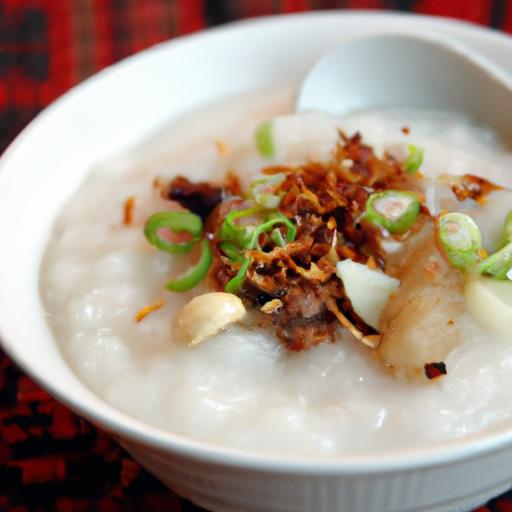
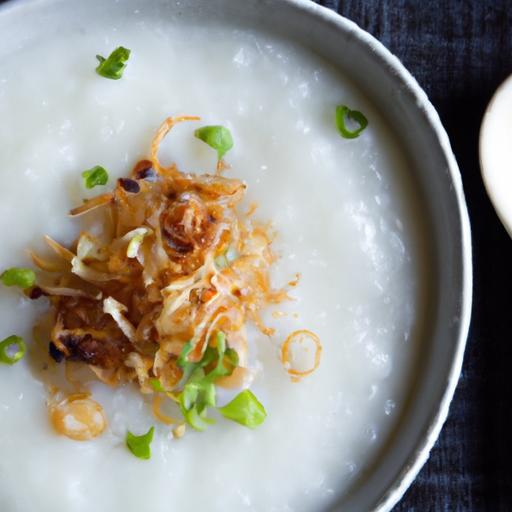
- Spoon the steaming congee into bowls. Drizzle sesame oil on top and garnish with chopped green onions and optional fried shallots for texture and crunch.
- Serve immediatly with extra condiments on the side, inviting personalized flavor enhancements.
Tips for Perfecting Your homemade Congee Recipe
- Choose the rice wisely: While jasmine adds fragrance, short-grain rice yields a creamier texture.
- Adjust thickness: for thinner congee, add more water during cooking or at serving time. For richer consistency, simmer longer or reduce liquid slightly.
- Low and slow: Stir occasionally over low heat to avoid scorching, ensuring even breakdown of grains.
- Make ahead: Congee thickens as it cools; simply reheat with a splash of broth or water to restore creaminess.
- Flavor layering: Fresh aromatics like ginger and scallions brighten the dish, while rich umami elements-soy sauce, fish sauce, or century egg-add depth.
Serving Suggestions
To elevate your serving experience, offer a colorful array of garnishes on the side: crisp fried shallots, pickled vegetables, soft-boiled eggs, or chili oil create inviting complexity. Pair with steamed greens or a simple side of salted duck egg to honour traditional Asian accompaniments. Serve congee in deep bowls to capture steam and enhance the comforting warmth in every bite.

Nutritional Information
| Nutrient | Per Serving |
|---|---|
| Calories | 180 kcal |
| Protein | 4g |
| Carbohydrates | 38g |
| Fat | 1.5g |
Embrace the versatility and comfort found in each bowl, understanding how this rice porridge is cherished as a healing, customizable dish in numerous Asian cultures. to deepen your culinary journey, explore more recipes inspired by traditional grains in our Asian breakfast classics collection. For historical insights and health studies, check authoritative resources such as this research on rice porridge nutrition.
Q&A
Q&A: Congee – The Comforting Rice Porridge Across Cultures
Q1: What exactly is congee?
A1: congee is a warm, soothing rice porridge made by slow-cooking rice in a generous amount of water or broth until it breaks down into a creamy, velvety texture.Often described as the ultimate comfort food, congee’s simplicity is its charm – humble grains transformed into a gentle, nourishing dish.
Q2: Where did congee originate?
A2: While congee is commonly associated with East and Southeast Asia, its roots stretch far and wide. Ancient records suggest rice porridge has been enjoyed in china for over two millennia, but variants of rice porridge appear across Africa, the Indian subcontinent, and even among indigenous peoples worldwide. Each culture has shaped it uniquely, turning it into a universal symbol of warmth and care.
Q3: How is congee eaten across different cultures?
A3: The beauty of congee lies in its versatility. In China, it’s frequently enough accompanied by pickled vegetables, salted duck eggs, or century eggs-adding bold, savory punches. In Korea, juk includes chestnuts and ginseng to nourish the body. Thailand’s jok favors minced pork and fresh ginger, while in India, variations like kanji incorporate coconut milk and spices. From plain and soothing to richly adorned, congee adapts to local tastes and moods.
Q4: Why is congee considered a comfort food?
A4: Congee is the culinary equivalent of a warm hug. Its soft texture is easy on the stomach, making it an ideal meal when under the weather or in need of gentle sustenance. Beyond its physical comfort, congee often carries cultural memories – a mother’s care on a sick day or a simple breakfast that grounds the start of a bustling day. It’s both a healing and heartening dish.
Q5: Can congee be healthy?
A5: Absolutely! congee is naturally gluten-free and,depending on the accompaniments,can be a balanced meal rich in carbohydrates,protein,and micronutrients. Using broth instead of water boosts flavor and nutrition. Adding herbs,vegetables,or lean meats can transform it into a powerhouse of wellness.Its slow-cooked nature also aids digestion, making it a favorite in dietary therapy.
Q6: What are some creative ways to enjoy congee today?
A6: Modern cooks have taken congee far beyond tradition. Think truffled mushroom congee for a luxurious twist, or a tropical version sweetened with coconut milk and fresh mango. Some chefs incorporate superfoods like chia seeds or quinoa for added texture and nutrients. Whether savory or sweet, minimalist or extravagant, congee invites creativity while honoring its humble roots.
Q7: How can someone make basic congee at home?
A7: Making congee is beautifully simple: rinse 1 cup of rice, then simmer it gently in 6 to 8 cups of water or broth for about 1 to 1.5 hours until the grains dissolve into creamy porridge. Stir occasionally to prevent sticking. Adjust the water ratio to achieve your preferred consistency-from soupy to thick and creamy. season lightly, then personalize with your favorite toppings, like scallions, soy sauce, or shredded chicken.
Q8: What makes congee so enduring across cultures and centuries?
A8: Congee’s endurance lies in its universal appeal – it nourishes the body and soothes the soul. Its ability to adapt to various ingredients, dietary needs, and traditions makes it timeless. Whether the chilly mornings of northern China or the tropical evenings of Southeast Asia, congee offers comfort and sustenance in equal measure, weaving a thread of warmth through diverse cultures and generations.
Wrapping Up
Whether savored as a humble breakfast staple or elevated into a comforting feast, congee stands as a timeless testament to the universal language of comfort food. Its gentle warmth and endless variations invite us to explore not only the rich tapestry of flavors across cultures but also the shared human experience of nourishment and care. As you stir your own bowl of congee, may you find more then just sustenance-may you uncover a soothing connection to traditions old and new, reminding us all that sometimes, the simplest dishes carry the deepest stories.